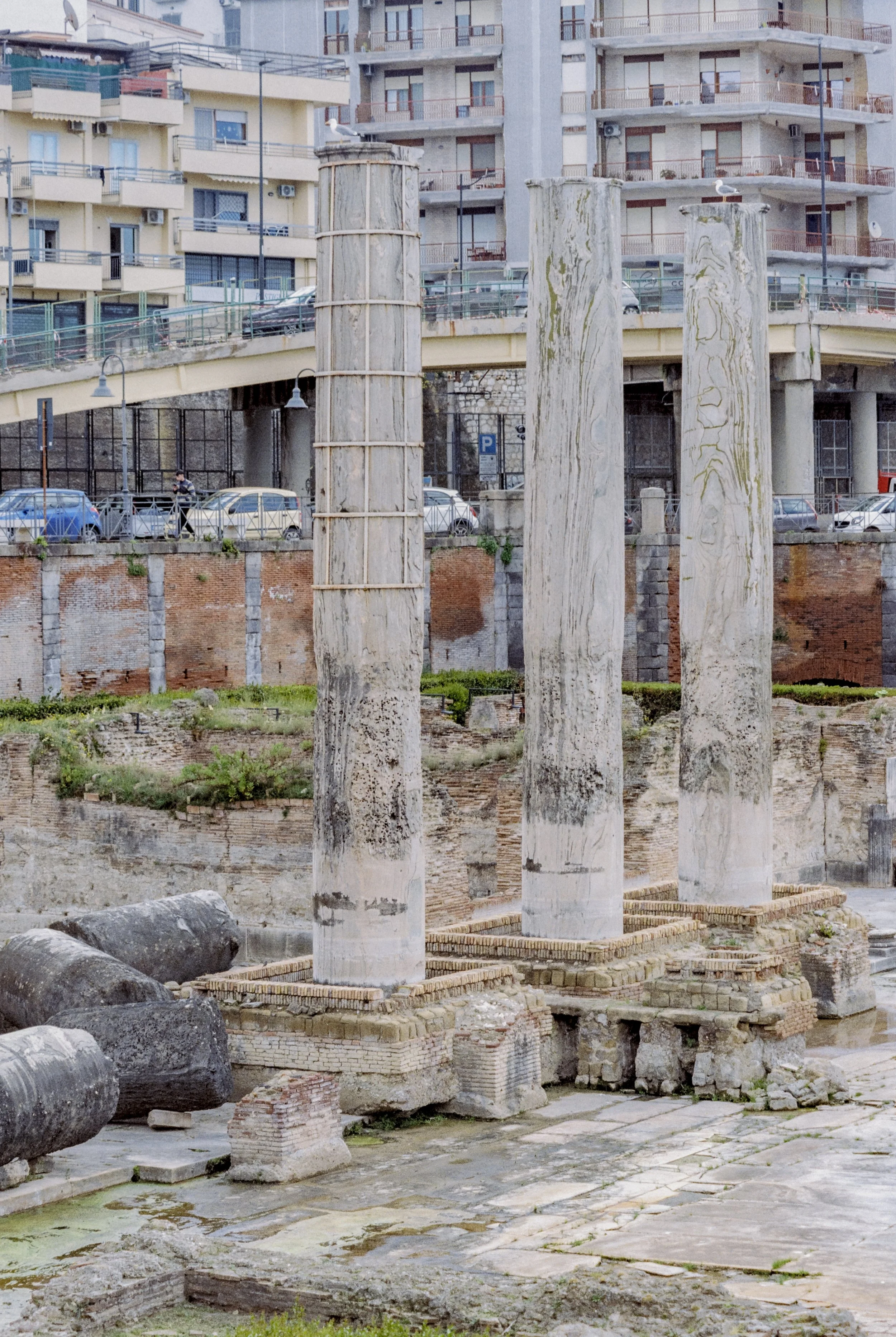
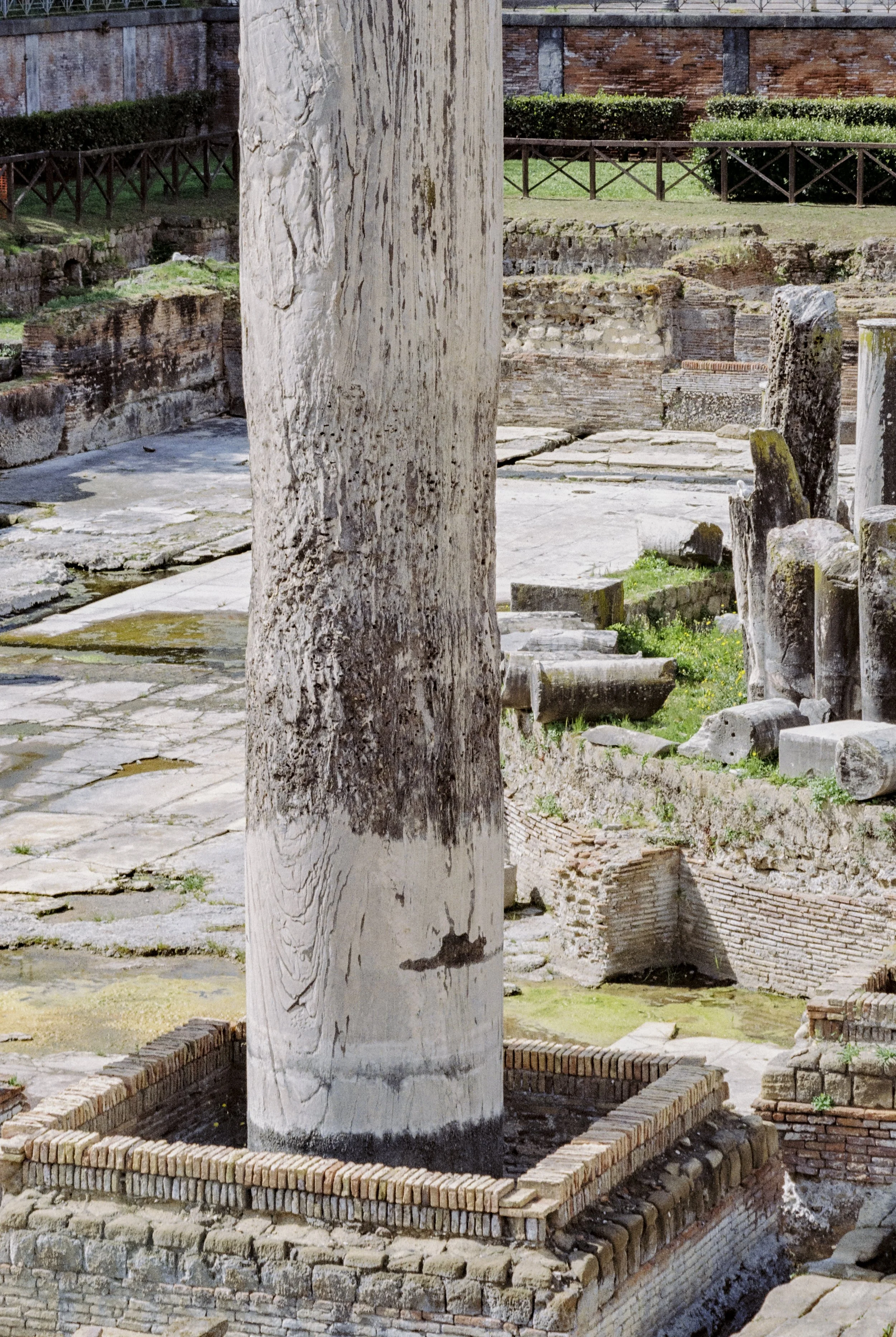
A trio of marble cylinders, their surfaces veined like the contours on a map. The sensuous swirls of marmo cipollino. The suffix -ino - often attached in Italian to the meek and the innocent, like gattino or bambino - is in this case used analogically, conveying not endearment, but resemblance: the veins of a sliced onion. There is, after all, nothing diminutive about these great trunks of stone, which once supported the portico of Puteoli’s grand marketplace.
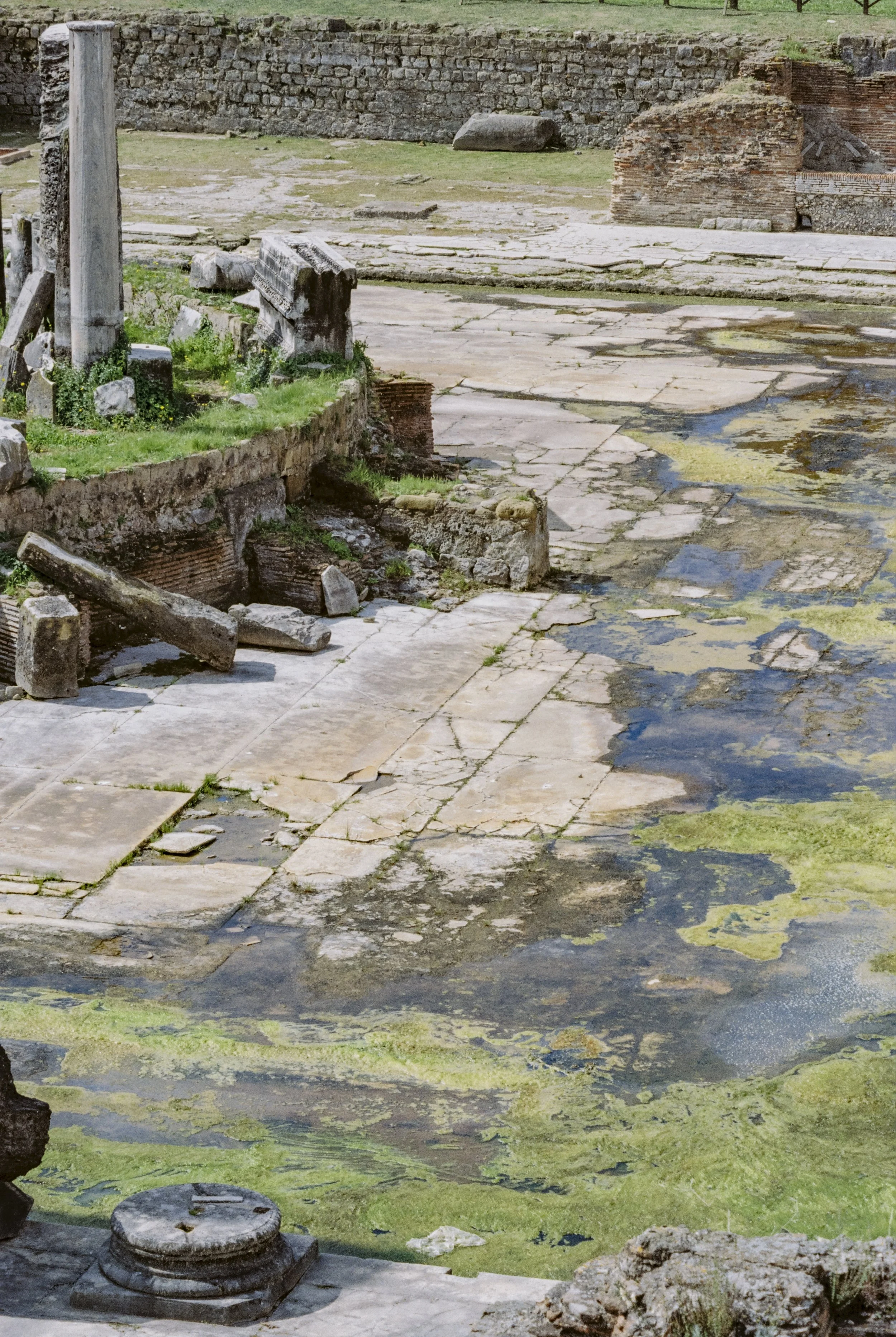
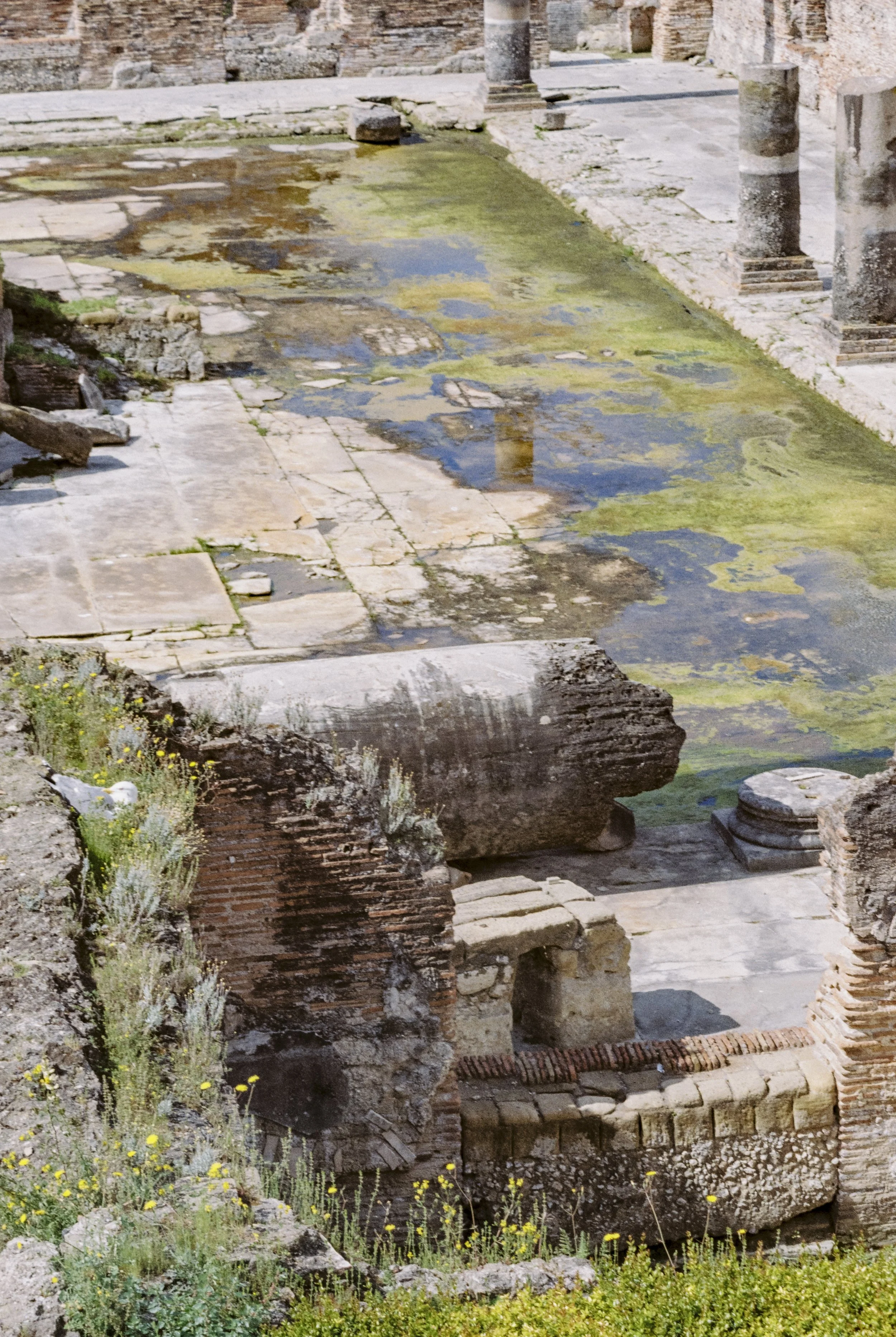
Today, they are standalone monuments a little way outside Pozzuoli’s postwar core, the focal point for an archaeological site whose silhouette is ubiquitous on gelaterria awnings and laminated menus in local eateries. Yet, given their proximity to the iconic Vesuvian cities, they endure in relative obscurity. Once part of a functional whole, they have long since lost their embellishments, standing in their time-worn truth. Their decapitated forms rendered not quite rudimental, being still, despite their roughness, carefully and deliberately shaped; yet, lacking the ornate capitals they once bore, exuding a kind of austere dominion — a blank refusal to yield.
For centuries, the columns stood half-buried in the rich soil of coastal Campagna. Protrusions in a vineyard; the Vigna delle tre colonne, as it was known. An otherwise unremarkable tract, certainly not the only plot in the patchwork that rippled over the hills to host antique remains. The Campi’s prodigious fertility had been exploited for millennia. The dark soils suffused with minerals vomited up from the bowels of the earth, and then broken down again through ceaseless weathering.
Drawn up by creeping roots into the veins of thirsty plants, whose swollen ovaries were then crushed into a fragrant pulp to produce a powerful, gritty wine with a distinctly saline quality - commonly described by sommeliers as like apples, sea air, a hint of honey. It was the Greeks, advancing the frontier of cultivation from their hilltop base at nearby Cumae, who first sowed these fields. When the Romans took over, they trained vines on wooden stakes, such that from a distance the slopes appeared seized by a phalanx of warriors. It was this that gave name to the native grape: Falanghina.