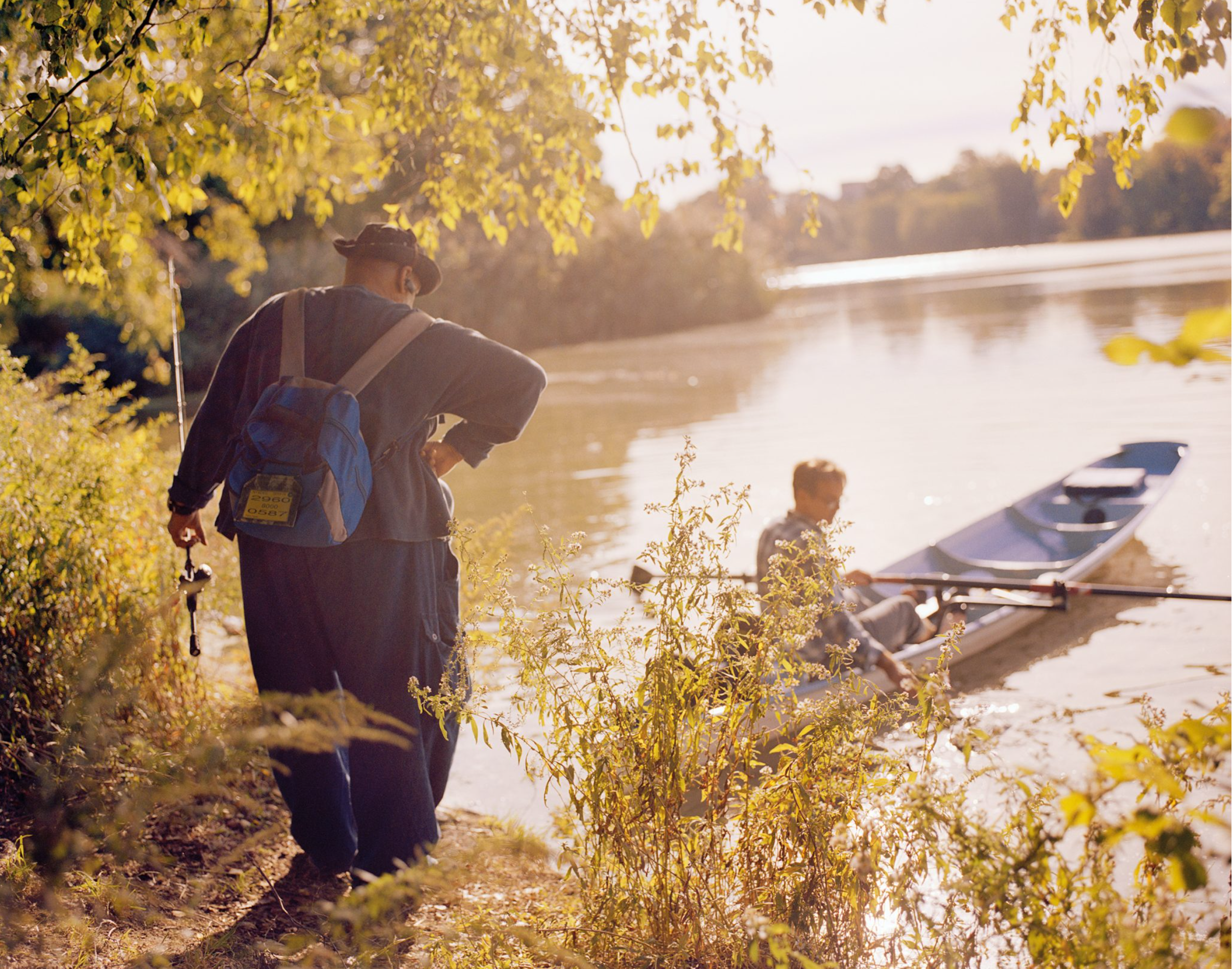
The world on these pages is a bounded sanctuary, a garden of delights. At core this is a book about finding refuge in fresh air; in groves, companionship, solitude. There are larking teenagers, scenes of joy and zen, a couple on their wedding day, a little girl dressed as though for hers. People pursue their passions in dappled bowers and on frozen fields, in apparent harmony with the creatures and rhythms around them - sculptural swans that evoke Bill Brandt’s nudes; the awkward flap of startled ducks; a shy cat in smoky grey. Life is presented here in concentrated, rose-tinted form - and it’s beautiful.
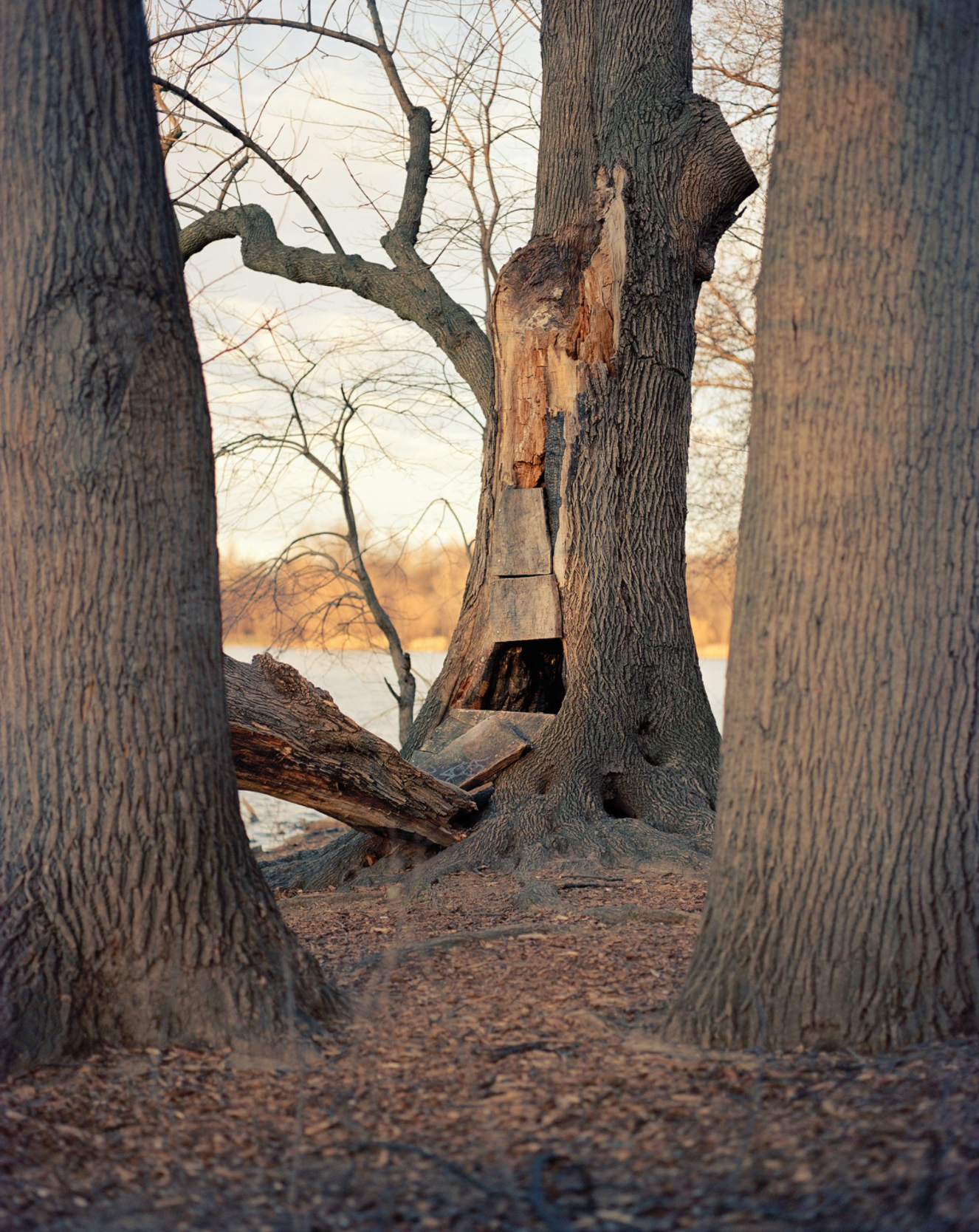
But Prospect Park remains a particular paradise, a tethered one. There are hints of anxiety in certain faces, open vulnerability and attempts to conceal it. There’s a sturdy old tree with a cavity in its trunk, partially covered with wooden slabs and framed by two sentries - a strange, symbolic hybrid. The park decays and withdraws, leaving behind the rust of dead leaves and the detritus of hazy days by the lake. But as Rozovsky writes, although it has its ‘moods and temperaments’, it ‘never betrays democracy.’
No matter the flux of the seasons, the park is always there, always open. The book is dedicated to F.L. Olmsted, the great landscape architect whose project was as much about politics as topography. On returning from a tour of England in 1850, Olmsted set out to create something akin to Birkenhead Park in the United States - a ‘People’s Garden’ which levelled social difference and promoted egalitarianism. The culmination of his efforts was of course Central Park. But Prospect has always had a different character: less crowded, more laidback.

There is no sign of conflict on these pages, no prejudice. It’s a true melting pot, New York City in miniature. And despite the obvious turning of the seasons, somehow time itself is dissolved in the mix. There is no linear chronology here, no narrative as such. The only real intrusion of historical time comes through the odd noughties Nokia. And only a couple of images remind us that just outside this lovely oasis is a hyperactive metropolis, its skyline ever taller, ever skinnier. Rozovsky’s denizens are ensconced in a kind of bubble.
Olmsted wanted his parks to transport people, to confer an almost instant tranquility. He provided both meadows and private nooks, and Rozovsky’s subjects revel in these spaces. She is witness to their pastimes, their rituals; moments of reflection and headlong rush. Some are special moments that will endure through the years; others destined to skitter into oblivion.
The book was made over the course of nine years, with the last photo taken just as the pandemic began. Since then, parks and green spaces around the world have become all the more important to city dwellers . It’s fitting, then, that this paean should appear now, at a time when we can begin tentatively to imagine a post-Covid world.